
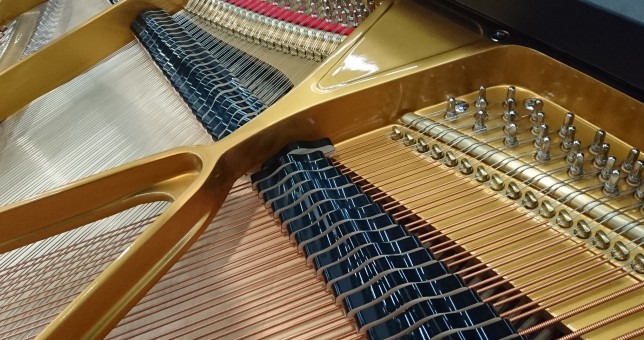
If you own a piano, you’ve probably wondered: how often should I actually have it tuned? It’s one of the most common questions we hear at our store — and one of the most misunderstood aspects of piano ownership. The short answer is at least twice a year. But the full answer depends on your instrument, your environment, and how often you play.
In this guide, we’ll break down everything you need to know about piano tuning frequency, what happens when you skip it, and how to keep your piano sounding its best for decades.
The standard recommendation: twice a year
The Piano Technicians Guild and most professional piano tuners recommend tuning your piano at least twice per year — roughly every six months. This applies to the average home piano that sees regular but not intensive use.
Why twice a year? Because pianos are primarily made of wood — the soundboard, bridges, pinblock, and cabinet all respond to changes in temperature and humidity. As seasons shift, those materials expand and contract, causing the tuning pins to drift. Spring and fall, when humidity swings most dramatically, are typically the worst offenders.
As a general guide: casual players who sit down occasionally should plan for two tunings per year. Active students practicing daily are better served by three to four tunings per year, since accurate pitch is essential for developing a good musical ear. Performance and studio pianos are tuned monthly or before every performance. Brand new pianos need three to four tunings in their first year, as new strings stretch significantly during the settling-in period.
New pianos need extra attention
If you’ve recently purchased a new piano, plan on tuning it three to four times in the first year. New piano strings are made of high-tensile steel wire, and they stretch significantly during the initial settling-in period. No matter how well the piano was tuned at the factory or showroom, that tension will shift once it’s in your home and adjusting to a new environment.
A good schedule for a new piano is: first tuning about four to six weeks after delivery, then again at three months, six months, and twelve months. After year one, you can settle into a twice-yearly routine.
What happens if you don’t tune your piano?
Skipping tunings doesn’t just make your piano sound a little off — it can cause real, lasting problems. A piano that hasn’t been tuned in years will drop significantly below standard pitch, known as A440. When this happens, a single tuning session isn’t enough. Your technician will need to do a pitch raise, which is a rougher, more intensive process that costs more and puts additional stress on the strings and frame.
Children learning to play on an out-of-tune piano also develop a distorted sense of relative pitch, which can undermine years of ear training and music education. Tuning pins can loosen over time if tension is never maintained, making future tunings harder and eventually requiring expensive repairs. And simply put, an out-of-tune piano sounds bad — which makes everyone less likely to sit down and play it.
If your piano hasn’t been tuned in more than two years, don’t wait any longer. A piano that has dropped more than half a step in pitch may need multiple tuning sessions to safely restore it without risking string breakage.
Humidity and your Texas home
If you live in the Dallas–Fort Worth area, humidity is a special concern. Texas summers bring intense heat and humidity, while winter months — with the heater running constantly — can dry your home out significantly. These seasonal swings are hard on acoustic pianos.
A few things DFW piano owners should consider: keep your piano away from exterior walls, HVAC vents, and windows, since drafts and direct airflow accelerate tuning instability. Aim for 45 to 70 percent indoor humidity — a room humidifier or dehumidifier can help maintain a more stable environment year-round. You might also consider a Dampp-Chaser system, a humidity control unit installed directly inside the piano cabinet. Many piano technicians in the DFW area highly recommend these for our climate.
Does playing more mean tuning more?
Yes and no. Heavy playing — especially with significant force — can cause strings to go out of tune faster. But the bigger factor is almost always environmental change rather than use. A piano sitting untouched in a house that swings between cold and hot will go out of tune faster than one played daily in a climate-controlled studio.
That said, students practicing daily should plan for at least three tunings per year. Accurate pitch feedback is essential for developing musicianship, especially in the early years.
How to find a qualified piano tuner
Always look for a Registered Piano Technician, or RPT — a credential awarded by the Piano Technicians Guild to technicians who have passed rigorous written and practical exams. An RPT doesn’t just tune your piano; they can assess the overall health of the instrument, spot worn parts early, and advise on regulation and voicing.
When you visit our showroom or schedule a service call, we’re happy to recommend trusted RPTs in the Carrollton and greater DFW area.
Bottom line
Tuning your piano twice a year is the minimum — think of it like a dental cleaning for your instrument. It’s a small, regular investment that protects a much larger one. A well-maintained piano sounds better, holds its value longer, and inspires more playing.
If you can’t remember the last time your piano was tuned, that’s your sign. Schedule a tuning today.

